
Today the lovely Maggy is visiting from Red Ted Art with a great activity to introduce the idea of aerodynamics and trajectory to your children.
How wonderful to be visiting from Red Ted Art today! It is no secret that I LOVE Science Sparks and all that these wonderful ladies have to offer us. I loved science at school (they were my best subjects), and yet as an adult and mother, I do very little of it (instead, I do LOTS of kids’ crafts. I guess you can’t have everything)! I think one of my main “problems” is making science easy for young children. This is why Science Sparks is such an inspiration and always at the back of my mind!
I would love to share a simple but fun craft and activity that we did a couple of weeks ago in order of the Olympics, but that has two (if not more?!) great science-y elements to it! Our shooter game:
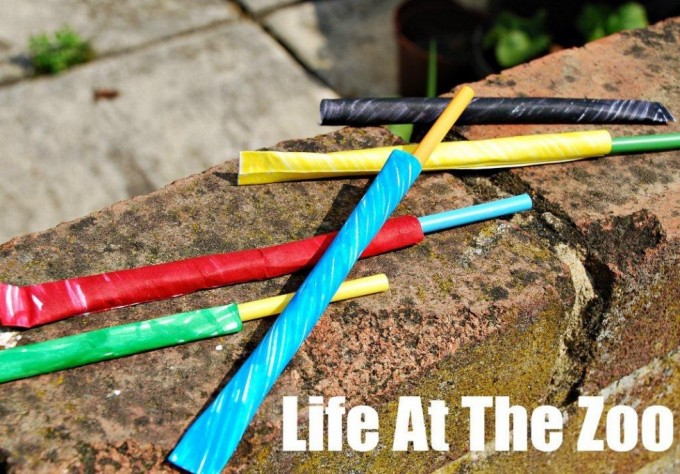
The idea is simple – make your shooters out of paper, glue and straws (check out how to make them and what we learnt from playing with them over at Life At The Zoo). Then blow hard and see them fly.. see how far you can make them fly!
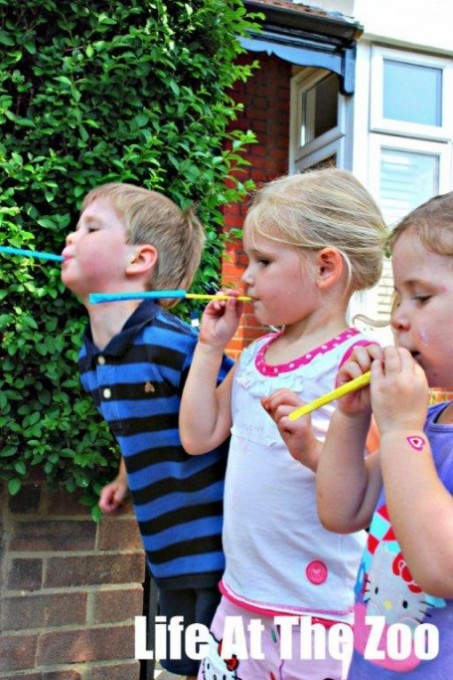
What’s the science behind a straw shooter?
- Aerodynamics – how does it work?
What makes your shooter fly? It is a simple example of aerodynamics.
Air is blown down the straw. It travels to the end and pushes its way out, taking the shooter with it as it moves. The harder you puff, the more energy the air has and the further your shooter will fly.
- Trajectory – what is it?
What happens to your shooter if you point it up or horizontally? How far does it fly? Why does it fly differently? This is all about an object’s trajectory. Remember the energy I mentioned in 1) that makes the shooter go forwards? Well… on Earth, there is a second “energy” or “force” called gravity which is also making the shooter move – in this instance, it is making it move down. When you combine these two forces, you get a curved movement. Depending on the angle you puff, the trajectory will be different.
If you want to see another example of trajectory, the next time you are filling up your paddling pool with a hosepipe, point the hosepipe at an angle upwards. You can see the trajectory of the water is a curve. The bigger the angle and you will see you can get the water to go further and further until you reach a point, and then it starts getting closer to you again…try pointing it straight up 🙂
- More things to think about:
- How do things like wind impact the flight of your straw shooter? What happens when you blow downwind vs upwind or if the wind comes in from the side?
- What do you need to change in 2) in order to aim your shooter through a hoop?
Big thanks to Maggy for this fab post. xxx
Last Updated on July 9, 2025 by Emma Vanstone


Thanks for linking on Kids Get Crafty and spreading the Life At The Zoo love 🙂
Maggy
Looks like they are having fun.
Thank you for having me!
🙂
i love this, its so simple. Goblin would play this for hours – but fixing the paper back on the straw would drive me nuts
looks like lots of fun!
I bet they had a great time!
Oh I love these! Just dropping by to let you know that I have featured this on Growing A Jeweled Rose for the week! 🙂
Oh, I love this! Thank you for sharing at Sharing Saturday!!
Science love. :sigh: Thanks for sharing at the Sunday Showcase. I pinned this to our feature board. 🙂
So glad you liked it. Thanks very much Lifeatthezoo