Do you know that adding carbon dioxide to water makes it more acidic? We used red cabbage indicator to test the pH of tap water and carbonated water from a Sodastream. The tap water was slightly alkaline, and the fizzy water was acidic!
This is another great way to demonstrate the effect of carbon dioxide on the ocean ( ocean acidification ). When carbon dioxide dissolves, it forms carbonic acid, which dissociates, releasing hydrogen ions into the water and making it more acidic.
Red cabbage indicator is a safe and easy to access indicator for testing pH.

How to measure the pH of carbonated water
You’ll need
Red Cabbage
Water
Pan
Sieve
Carbonated water
2 flasks/jars or glass containers
Instructions
Adult supervision needed.
Carefully chop the red cabbage and place in a pan with water. Heat gently until the water turns purple.
Drain and keep the water; this is your pH indicator. Leave it to cool for about 5 minutes.
Half-fill a small glass with tap water, and another one with carbonated water.
Add a little of the red cabbage indicator to each water sample.
Limitations of this activity as an ocean acidification demonstration
This activity demonstrates how adding carbon dioxide to water beautifully changes the pH, but there are a couple of limitations to be aware of.
- Our oceans are becoming more acidic, but the change has been from around pH 8.2 down to 8.1, which is still alkaline. Adding carbon dioxide to water, as we did here, drops the pH down to about 4.
- We also didn’t account for the salinity of seawater, which acts as a buffer against acidification. As an extension task, students could add a small amount of baking soda to a third water sample before testing it.
Extension Task
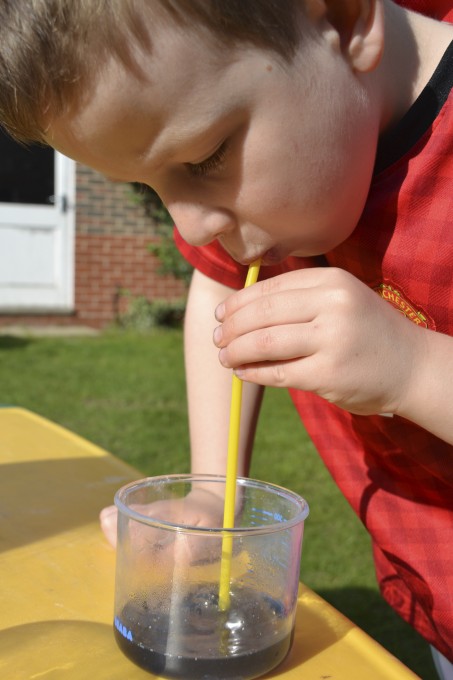
Add a little red cabbage indicator to water and gently blow bubbles into the water with a straw. You should find that the indicator changes from blue/purple to pink as the concentration of carbon dioxide increases.
Last Updated on September 22, 2026 by Emma Vanstone