
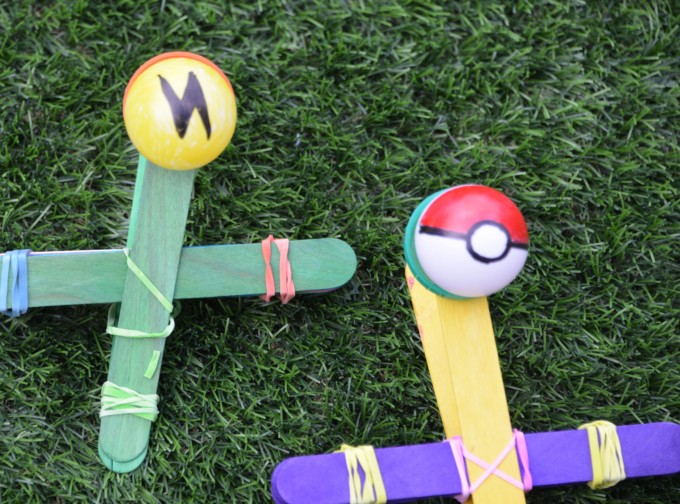
Lolly stick or popsicle stick catapults are very easy to make, provide hours of fun and are brilliant engineering and design projects. We made our popsicle stick catapults space-themed and turned table tennis balls into planets. There are so many different catapult designs and themes to choose from; you’ll be busy for weeks! Catapults are a brilliant way to learn about energy, gravity and Newton’s Laws of Motion.
Popsicle stick catapults are also great for a maths-based activity if children record how far different sizes/weights of balls travel. We’ve found that small pom poms fly very well as they are light.
Lolly stick catapults are simple to make and use, although young children may need some help. Once you get the hang of them, each one takes only a couple of minutes to create. They’re a great kids’ activity for a rainy day.
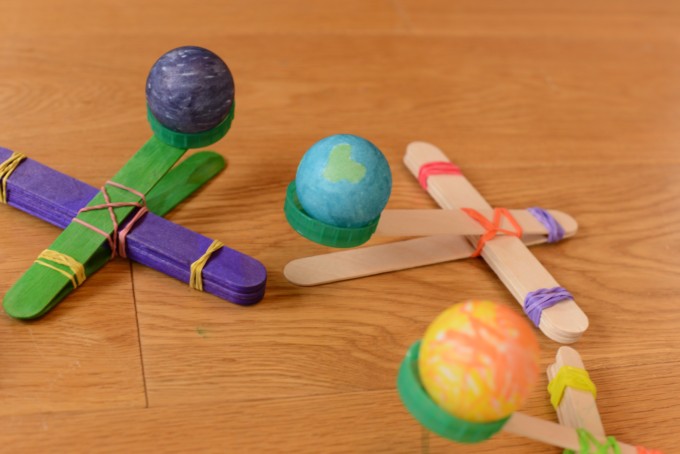
What you need for a Popsicle Stick Catapult
Wide popsicle sticks/ lolly sticks
Elastic bands
Other items to test
Double-sided tape
Milk bottle top
Tape measure – optional

How to make a lolly stick catapult
- Start with about seven popsicle sticks and place them on top of each other. Twist an elastic band around each end to hold them in place.

- Place another stick above and one below the stack of 7 so they make a cross shape. You should have more lolly sticks on the end to use for the milk top.

- Tie an elastic band around the middle of the cross.
- Twist another elastic band around the bottom of two sticks, as you can see in the photo.

- Attach a milk bottle top using double sided tape or strong glue.
- Experiment with your table tennis balls.
Popsicle Stick Catapult Investigation Ideas
Remember to only change one variable at a time
Change the design
Try adding extra or fewer sticks to the central part of the catapult.
Make the throwing arm shorter.
Change the item being catapulted
Investigate to find out if a heavier ball travels further.
Make it a challenge!
Set a challenge to find out how far you can make a ball travel!
Add some maths
Create a target with different numbers in different areas and use the lolly stick catapult to fire balls at the target. See who can score the most with a set number of balls.
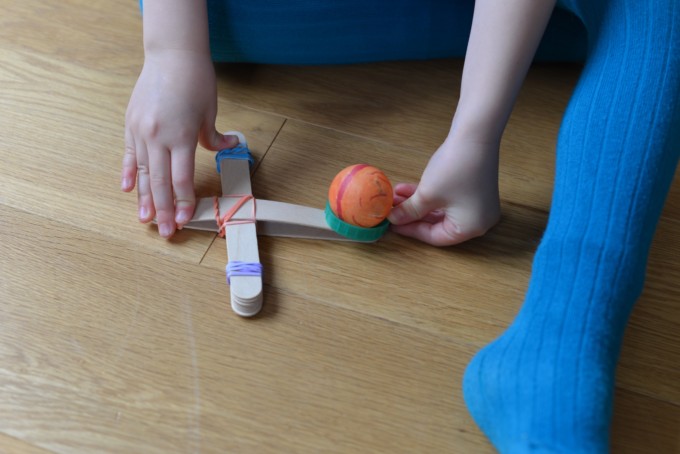
How Does a Popsicle Stick Catapult Work?
Newton’s First Law states that an object stays at rest until a force is applied to the object.
When you pull down on the catapult arm, elastic potential energy is stored. When you release the catapult arm, the potential energy changes to kinetic energy ( energy of motion ), which is transferred to the object, which then flies through the air.
Catapults and conservation of energy
A lolly stick catapult demonstrates energy being converted from one type to another ( potential to kinetic ) and transferred from one object to another ( catapult arm to the ball ).
If you push the catapult arm down further you are storing more elastic potential energy which means more kinetic energy is transferred to the ball when you release it. The further you push the catapult arm down ( which takes more force from you ) the further the ball will travel.
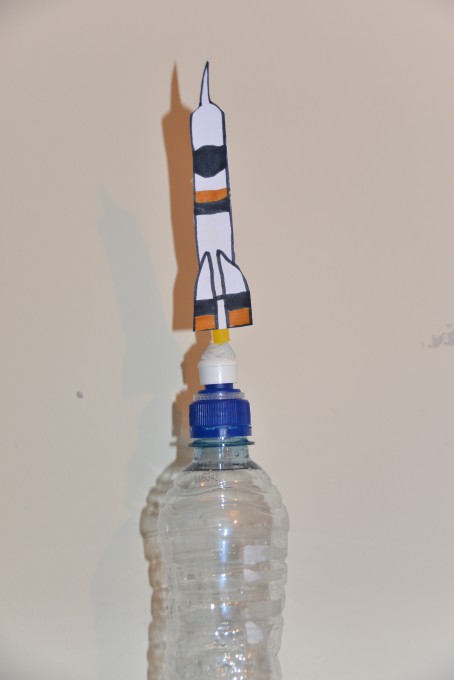
If you want to learn more about Newton’s Laws of Motion, try our film canister rocket.
More Catapult Design Ideas
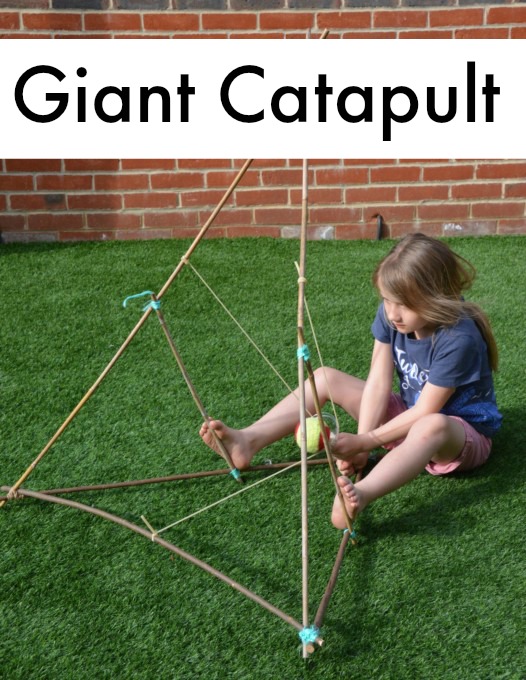
Can you build a giant catapult? We used this one to launch tennis balls over a net.
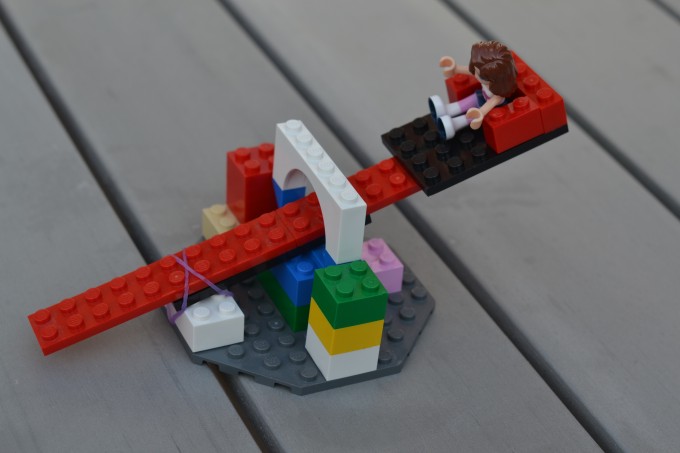
Another fun STEM challenge is a LEGO catapult. Ours took some engineering and lots of tweaking, but it worked very well!
Create a simple shoe box catapult. Again this is a brilliant easy engineering project for kids with lots of possible variations on the design and theme.

Try some catapult painting like Fun-a-Day.
Frugal Fun for Boys has another catapult design.
How about a snowman popsicle stick catapult? Or a pokemon catapult?


Last Updated on May 9, 2024 by Emma Vanstone



We made catapults in one of my science lab placements. The students loved creating their own catapult and decorating however they wished. They also had contests whose could go the furthest and tallest. They really enjoyed the activity!
Having read this I thought it was very enlgihtening. I appreciate you spending some time and energy to put this short article together. I once again find myself spending a significant amount of time both reading and leaving comments. But so what, it was still worth it!
Hi!
Would you be able to tell me the size of the rubber bands used for this project?
Thanks!
One of the first science activities my kids wanted to try from the book was making popsicle stick catapults. I was absolutely thrilled to see all the learning that took place with this science activity.
This is awesome! I finally made a nice catapult! Woohoo!!!
Absolutely fascinated by your post. Certainly good to keep kids occupied for a weekend afternoon.