The food available to animals varies depending on where they live. In habitats where food is limited, animals with features or adaptations that allow them to access food more easily are likely to survive more successfully than those without the advantage. Animals with adaptations that allow them to live longer are more likely to produce offspring to pass their genes on, and therefore, the advantageous adaptation. This process is known as natural selection.
Discover why bird beaks are different shapes with this fun investigation.
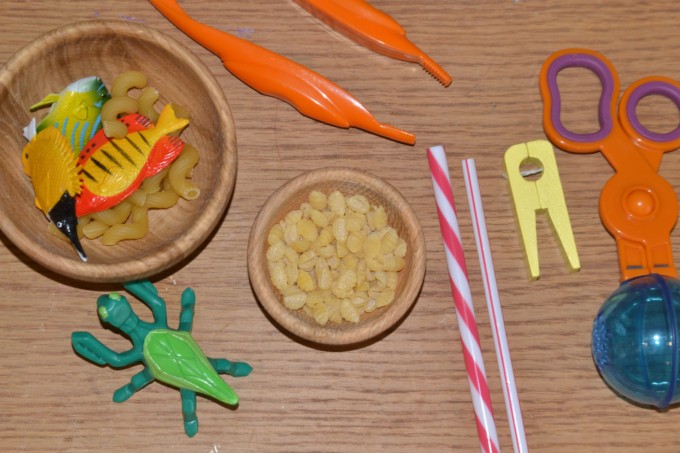
Bird Beak Adaptation Activity
Materials
Pegs
Tweezers
Chopsticks
Straws
Pasta
Pretend bugs
Other items that could be used – mini marshmallows, marbles
Bowls
Beak Adaptation Investigations
Use the pegs and different sized tweezers to pick up the pasta, fish and bugs.
Discuss whether some things are easier to pick up than others. For example, can tiny objects be picked up more easily with tweezers or pegs?
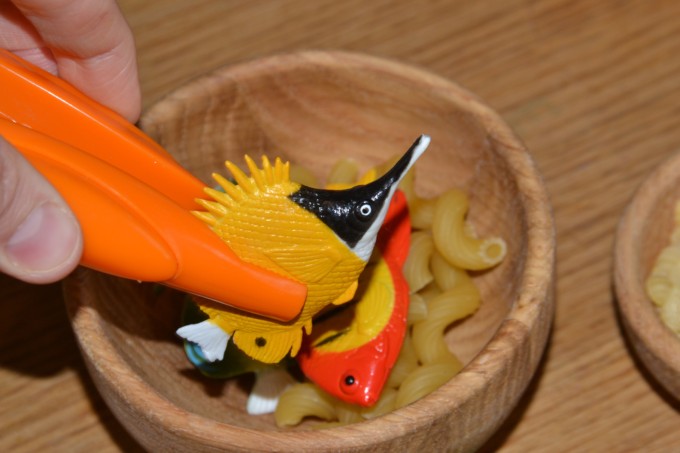
Did you know that birds’ beaks are shaped according to their diet?
Finches have a strong, cone shaped beak which they use to crack seeds, a bit like our tweezers.
Insect eaters have thin, pointed beaks ( maybe a bit like chopsticks )used to pick insects off leaves.
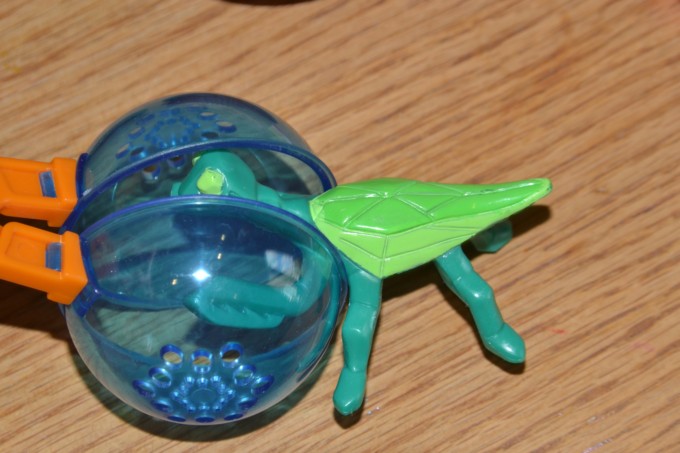
Hummingbirds have long beaks like straws which allow them to suck nectar from flowers and eat small insects.
Did you know birds that eat fish, have teeth-like structures on the edge of their beak to hold the fish?
Bird Science Extension Ideas
Collect sticks, feathers and leaves to build a nest. Think about what features the nest should have.
Build a bird’s nest using just tweezers. Remember, birds only have their beaks to build.
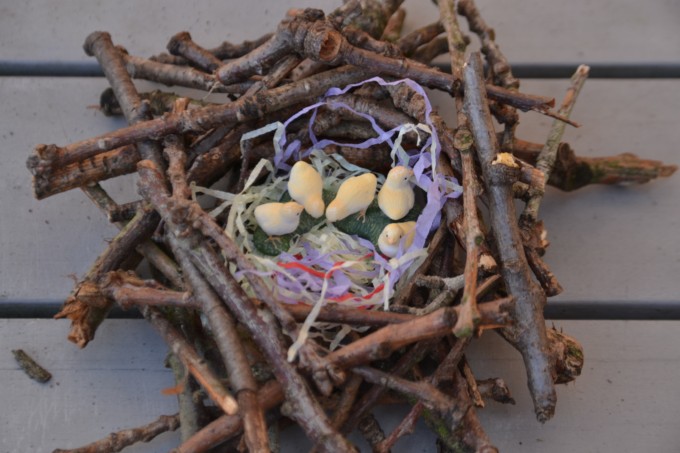
Facts about birds
Long-tailed tits use up to 2,000 feathers in each nest and fly between 600-700 miles to collect the materials needed!
Sparrows take advantages of holes in roofs to build their nest, they stuff the hole with grass saving a lot of time and effort.
Chaffinches nest in forks in trees and use sticky cobwebs to form anchors for the nest’s foundation.
Some birds, such as owls, use natural holes in trees to keep their young safe. This saves a lot of time and effort building a nest.
See the RSPB website for more information about bird nests and how you can help birds make their homes.
Bird Beak Challenge
Research about Darwin’s Finches.

What is selective breeding?
Selective breeding is when an animal or plant with a useful characteristic is used to breed. The offspring with the desirable characteristic are used to breed again, and the same is done with their offspring. Eventually, a new breed is produced where the animals or plants always have the desired characteristic.
Sometimes, two different breeds with different characteristics are bred together to produce a new breed with both characteristics from the original. For example, an apple tree that is naturally resistant to disease could be bred with a tree that grows a lot of apples. The cross-bred tree would be resistant to disease and grow a lot of apples!
Selective breeding is also known as artificial selection.
Science Concepts
Evolution
Natural Selection
Selective breeding
Last Updated on May 21, 2025 by Emma Vanstone