
I’ve got some fantastic spring science experiments to share today. As always, you don’t need any special equipment, just things you either already have around the house or that you can buy easily and cheaply from a supermarket.
Spring is the perfect time of year to get out in the garden and learn about the weather, plants, and animals, so these form the main theme of the collection.
Remember, I also have lots more easy STEM challenges and science experiments for all times of the year, so do take a look around!

If you have kids who love space experiments or science in the kitchen, I’d love it if you looked at my science books, too!
Plant Experiments for Kids – Spring Science Experiments
The easiest way to learn about plants is to grow some! Spring is the perfect time to start growing fruits and vegetables in the garden.
What is germination?
Find out the conditions needed for a seed to germinate (you might be surprised by what these are) by growing a bean in a jar. This is a lovely visual way to learn about germination.

What’s inside a flower?
If you look inside a flower, can you spot the male and female parts? The pollen ( yellow or orange powder ) is held on the male parts ( Stamen – anther and filament ), while the female area ( Carpel – stigma, style, ovary ) contains the parts that will become seeds after pollination. Dissecting a flower is a great way to learn about the structure and function of the different parts.

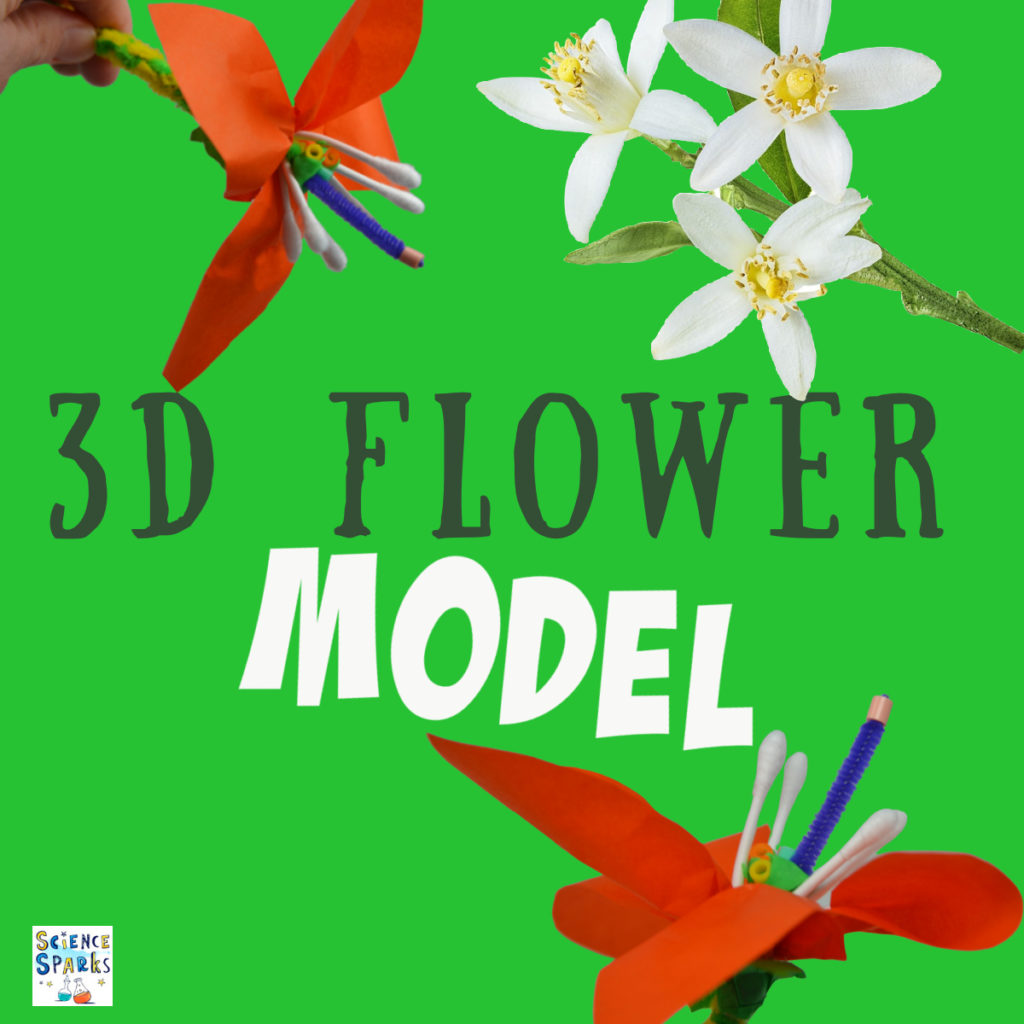
Another idea is to make a 3D model of a flower. Our model clearly shows the stamen and carpel. We used pipe cleaners, earbuds, and paper to make our flower models.
Can a plant grow in the dark?
Grow one plant in the light and one in the dark. You should see that the plant in the dark doesn’t grow as well and has yellow leaves. You can also demonstrate this with a multicoloured cress caterpillar.
How do plants transport water?
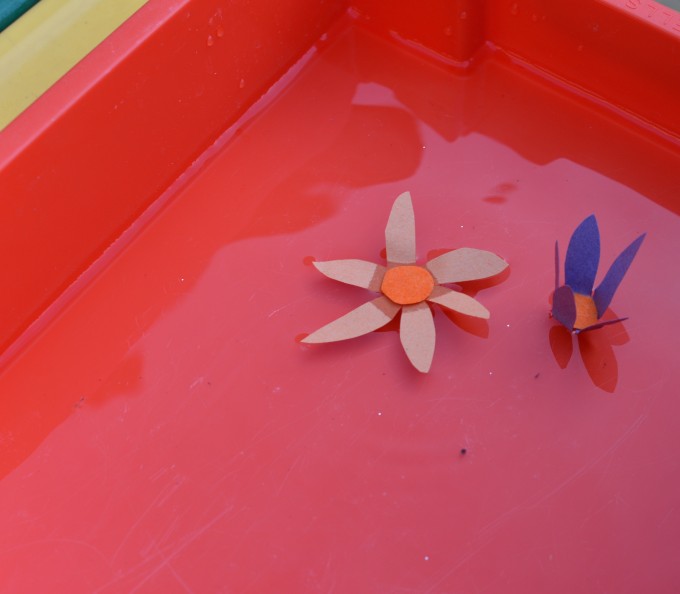
Discover how plants transport water up their stem with a capillary action investigation. This activity comes with free flower templates to make it very simple.
How do roots grow?
Plant a bulb in a clear container with stones and observe the root growth in this great activity from Buggy and Buddy.
How fast does grass grow?
Find out how fast grass grows with these fun grass heads from Red Ted Art. Grass heads are brilliant as the grass grows quickly, and children love giving them a haircut!
Coloured flowers and transpiration
Make some pretty flowers to learn about transpiration. All you need for this activity is a flower with white petals, such as a carnation, food colouring, and water. The coloured water travels up the stem into the petals, changing their colour.

Plant Science for Early Years
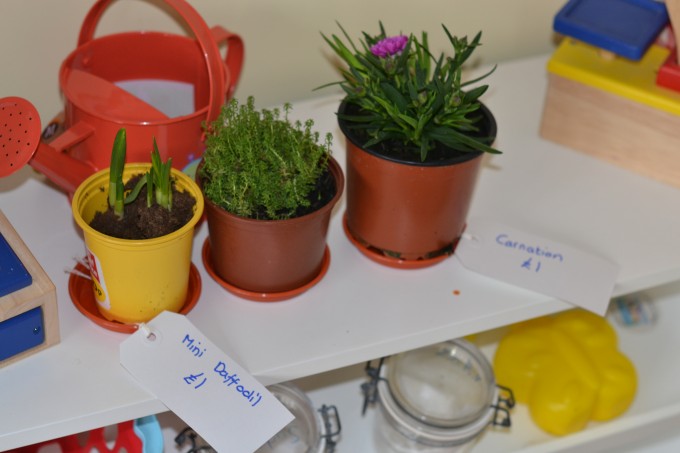
For younger children, you could set up a plant shop to learn about the different parts of a flower. One child can play the part of the shop owner, and the other can play the part of a customer.
Minibeast Experiments and Investigations
Minibeast Life Cycle
Make an edible butterfly lifecycle. This is another fantastic visual activity that works with pasta, fruit, vegetables or sweets. Small craft materials also work well if you don’t want to use edible items.
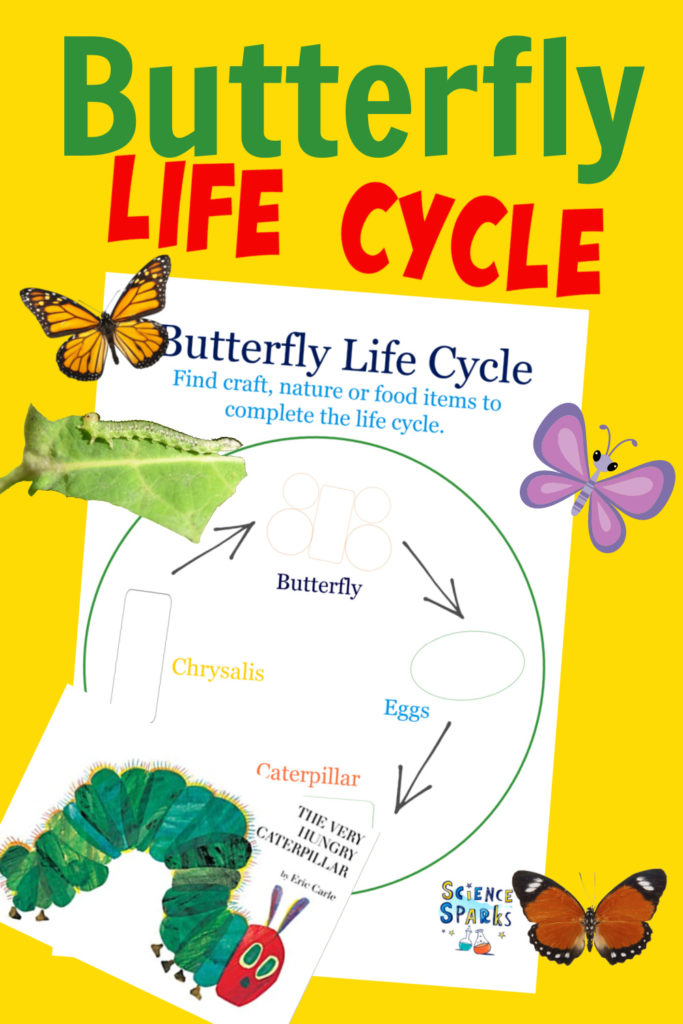

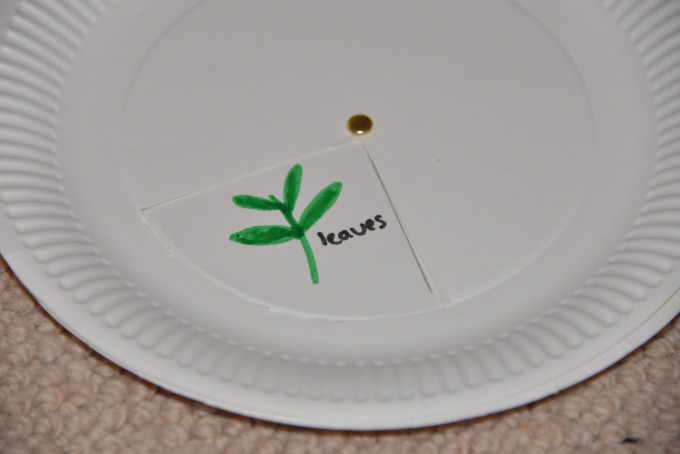
A simple alternative to the edible life cycle above is my FREE butterfly lifecycle spinner.


Paper plate life cycle spinners are a brilliant science craft activity, too!
Find frogspawn
Have you seen any frogspawn around? Rainy Day Mum has some top tips for raising tadpoles.
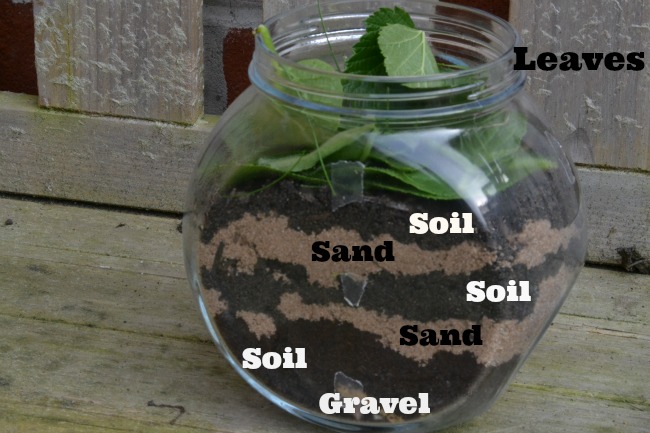
Make a wormery
Learn all about worms with a super simple wormery. The worms move around, mixing up the layers.
Welcome wildlife into your garden with a brilliant log pile home from Rainy Day Mum.
Spring Weather Activities
Spring can bring lots of rain. A simple rain gauge is an easy way to record the amount of rainfall over a period of time.

Do you know how rain forms? My easy water cycle experiment explains all.
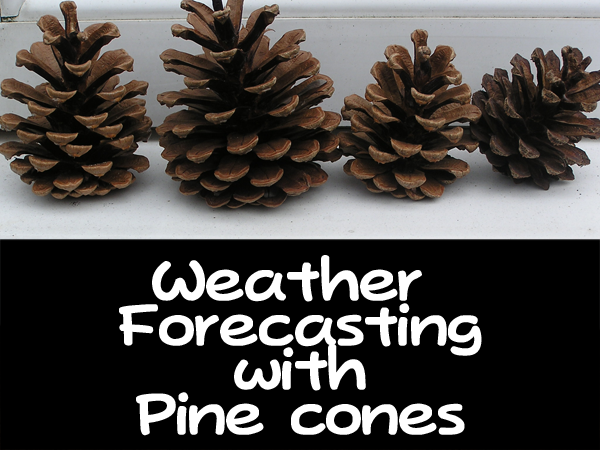
Make your very own pinecone weather station. Pinecones open up when the weather is dry and close when it is wet!
Messy Spring Activities
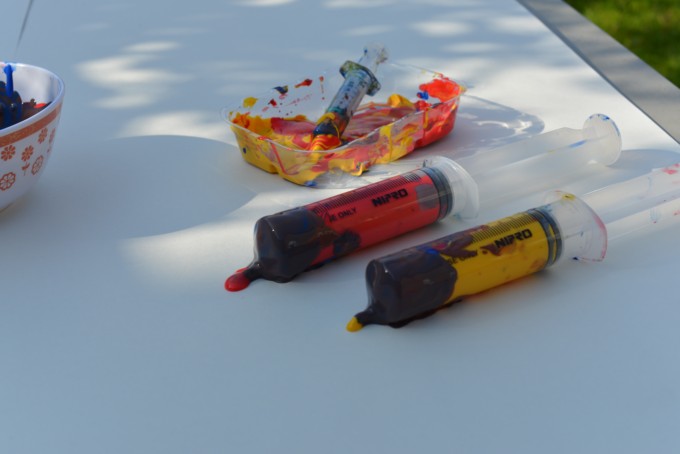
How about some painting with syringes? This is a great outdoor art activity, perfect for sunny spring days.
Create magical fairy or unicorn potions. If children measure and weigh the ingredients first, these are great for weighing and measuring practice.
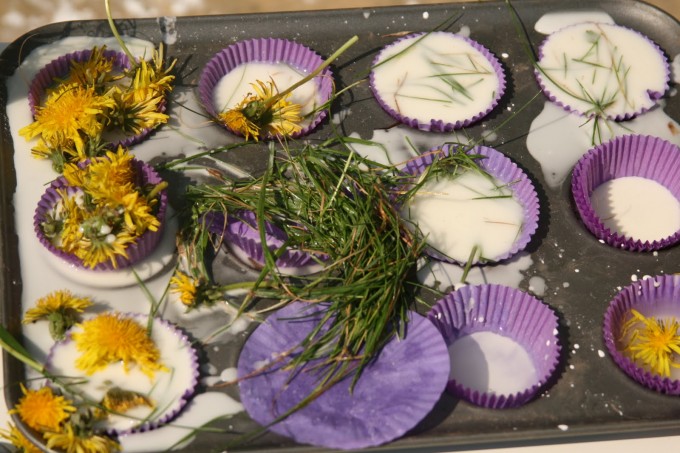
The Imagination Tree has some gorgeous flower and goop cupcakes.
My Humpty Dumpty egg drop investigation always feels very spring-like, too!
Indoor Spring Science Experiments for Kids
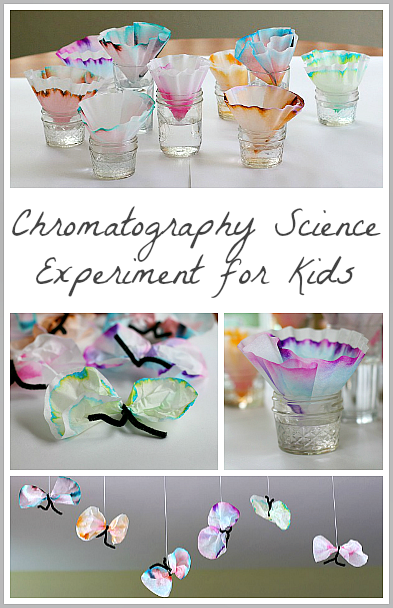
Try some chromatography and use the filter papers to make butterflies with this lovely activity from Buggy and Buddy.
My Little Three and Me has a beautiful spring sensory bottle.
Have some sensory fun with this lovely smelling garden play dough from Imagination Tree. Play dough is also a great material for learning about forces by stretching, pulling and pushing it.
Younger children will love our flower sensory tray. It is perfect for developing those all important fine motor skills, learning about the parts of a flower, and counting and recording data.
Finally, take a look at my spring STEM challenges for even more science fun!
Do you have any spring science experiments or spring activities for kids to share with us?

Last Updated on April 17, 2026 by Emma Vanstone



Great round up! I am adding it to my featured posts for Afterschool Link Up this coming Monday.
Thank you 🙂
I would like to say thanks for sharing this blog with us. I love science as I am a student of science subject that’s why I always ready to learn something. Through your blog I get to know many new things here about the life cycle of plants. I like the butterflies that you made but I think your site is the best to explain about the science to kids….
Great ideas, as usual! I think everybody needs a little spring after winter 2015. Thanks for sharing!
I am sharing these activities with my husband. He’s a teacher.